


WIRE ROPE BRIDLES
FEATURES

Abrasion Resistant

Low Stretch

Made in USA

Low Length Tolerance
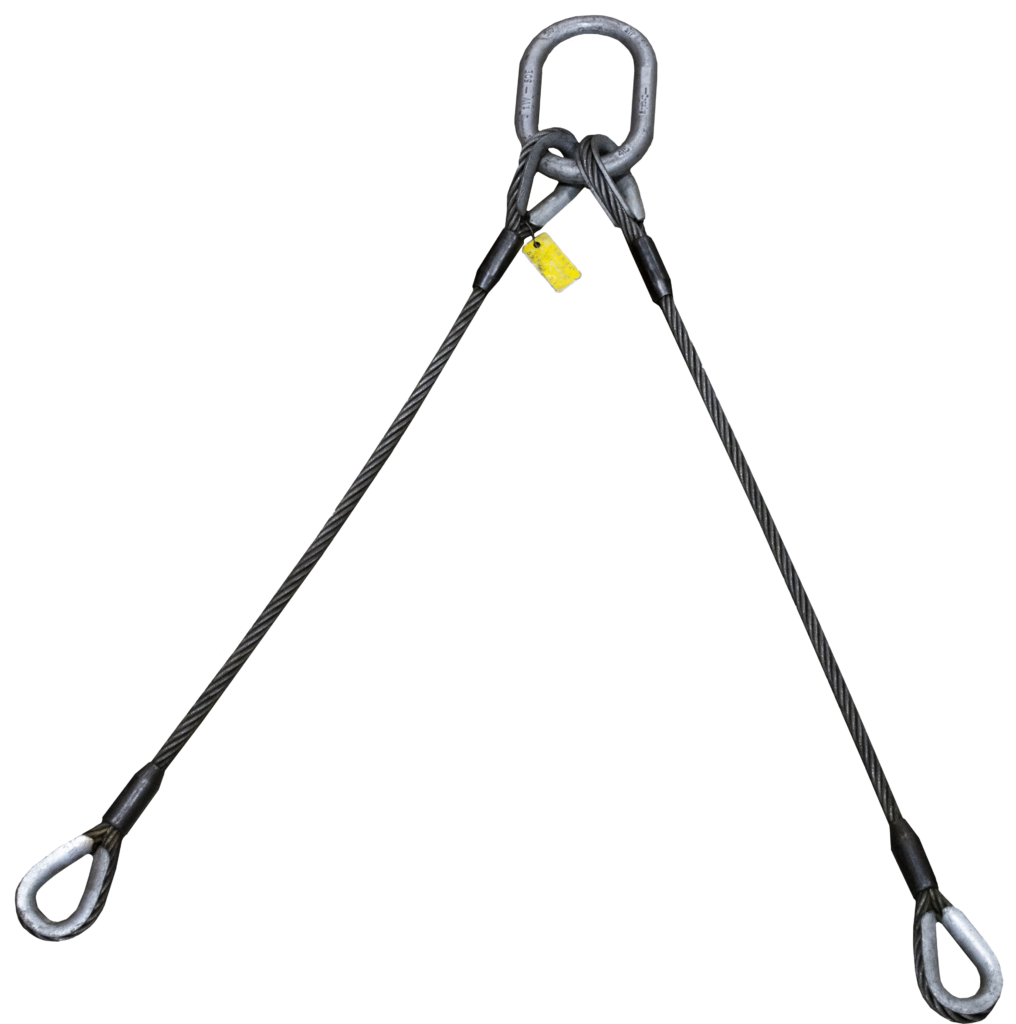
Wire Rope Bridle
Multi leg wire rope bridles are fabricated in two, three or four leg configurations. Riggers utilize bridles when multiple pick points are available and balance and control are priority. Utilizing 3 or 4 leg bridles will provide more balance and control to the user than lesser leg bridles or single independent slings. Commonly used in manufacturing, stevedoring, construction and general industry, wire rope bridles are often used to lift machinery, other materials, and shake out steel. They are available from ¼” to 1-¾” diameter. For automatic adjustments in your lift, consider the Equalizer Block with Twin-Path Slings.
EQUALIZER BLOCK
USE AND CARE
SPREADER BEAM
Quality In-House Fabrication
I&I Sling multi-leg bridles come standard with Crosby fittings and domestically sourced wire. Assembled in house, all wire rope bridles are mechanically spliced to provide best fabrication practices and enhanced safety to your critical lift. Compared to Loop Back slings, mechanically spliced slings are considered to be the safer option due to the backup redundancy of the splice in the eye. This splice can keep the sling eye together in a situation where the pressed sleeve fails. All bridles fabricated at an I&I Sling branch location are constructed with heavy duty thimble eyes and latched hooks. Wire rope bridles are tagged with common angles, including 60°, 45° and 30° angles. Wire rope bridle slings are made in accordance with ASME B30.9 at a 5:1 Design Factor.
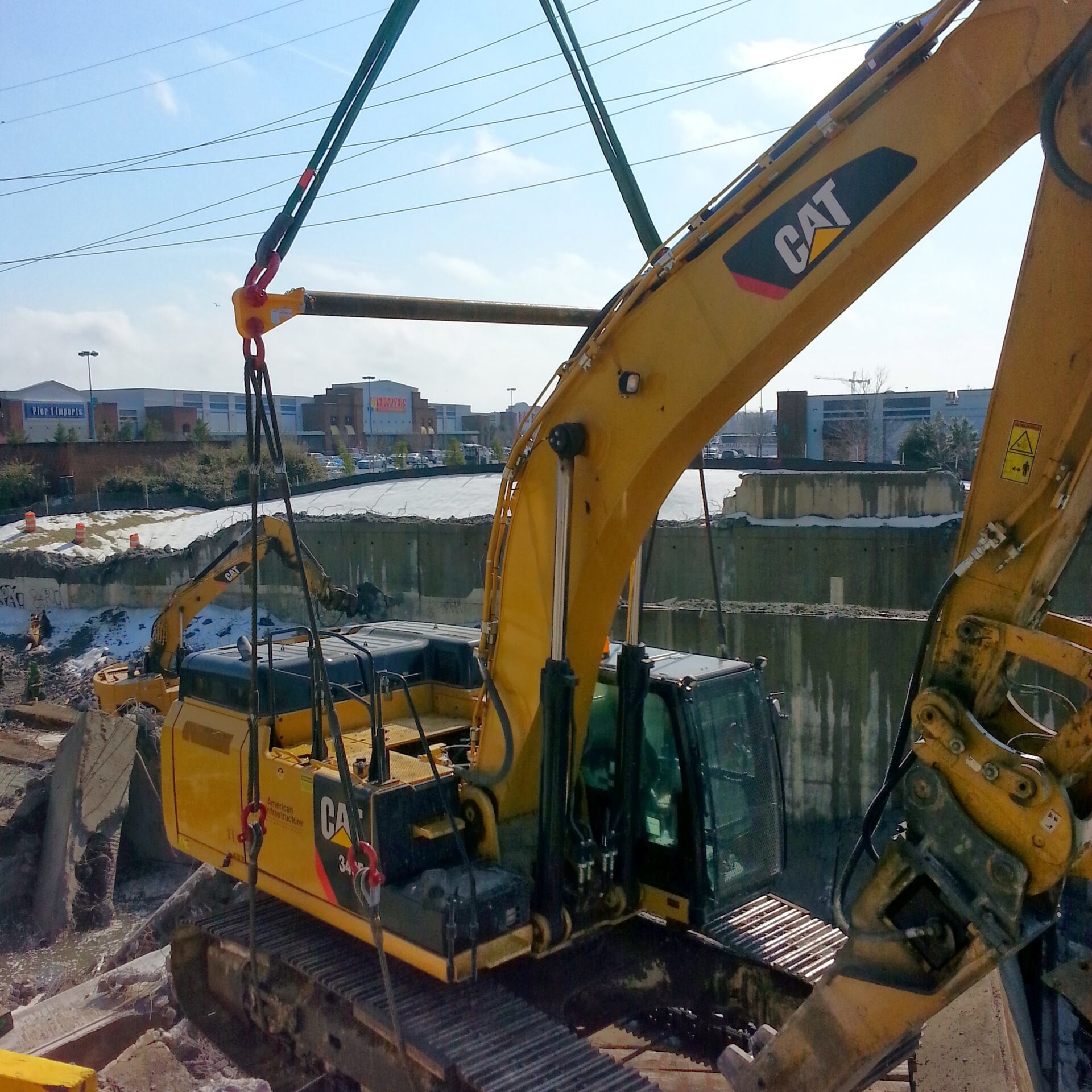
Built to Suit your Needs
The possible hardware connections for wire rope bridles are endless. There are many available options when it comes to which ring can be used on your bridle. This includes pear rings, wide rings, welded rings or sub assemblies. Bridle leg hooks can be substituted with shackles, oversized hooks, sorting hooks or clamps. Commonly constructed with 6x19 or 6x36 Extra Improved Plow (EIP) wire rope, wire rope bridles can fabricated with many types of wire rope to suit your needs including:
- Stainless Steel
- Galvanized
- Cable Laid
- Coated
Every lift is unique and your Product Advisor can work with you to make your custom lifting bridle.
Two Leg Bridle
| Rope Size (inches) |
Recommended Minimum Length |
Rated Capacity in Tons (2000 lbs.) | ||
|---|---|---|---|---|
| 60° | 45° | 30° | ||
| 1/4" | 1' 6" | 1.1 | 0.9 | 0.6 |
| 5/16" | 1' 8" | 1.7 | 1.4 | 1 |
| 3/8" | 1' 10" | 2.4 | 1.9 | 1.4 |
| 7/16" | 2' 4" | 3.2 | 2.6 | 1.9 |
| 1/2" | 2' 6" | 4.3 | 3.5 | 2.5 |
| 9/16" | 2' 10" | 5.5 | 4.5 | 3.2 |
| 5/8" | 3' 4" | 6.7 | 5.5 | 3.9 |
| 3/4" | 3' 8" | 9.7 | 7.9 | 5.6 |
| 7/8" | 4' 4" | 12.9 | 10.6 | 7.5 |
| 1" | 5' | 16.9 | 13.8 | 9.8 |
| 1-1/8" | 5' 10" | 20.7 | 16.9 | 12 |
| 1-1/4" | 6' 6" | 25.9 | 21.2 | 15 |
| 1-3/8" | 7' | 31.1 | 25.4 | 18 |
| 1-1/2" | 7' 6" | 36.3 | 29.6 | 21 |
| 1-3/4” | 9' 2“ | 48.5 | 39.5 | 28 |
Three Leg Bridle
| Rope Size (inches) |
Recommended Minimum Length |
Rated Capacity in Tons (2000 lbs.) | ||
|---|---|---|---|---|
| 60° | 45° | 30° | ||
| 1/4" | 1' 6" | 1.6 | 1.3 | 0.9 |
| 5/16" | 1' 8" | 2.5 | 2.1 | 1.5 |
| 3/8" | 1' 10" | 3.6 | 2.9 | 2.1 |
| 7/16" | 2' 4" | 4.9 | 4 | 2.8 |
| 1/2" | 2' 6" | 6.4 | 5.3 | 3.7 |
| 9/16" | 2' 10" | 8.3 | 6.7 | 4.8 |
| 5/8" | 3' 4" | 10.1 | 8.2 | 5.8 |
| 3/4" | 3' 8" | 14.5 | 11.8 | 8.4 |
| 7/8" | 4' 4" | 19.4 | 15.9 | 11.2 |
| 1" | 5' | 25.4 | 20.7 | 14.7 |
| 1-1/8" | 5' 10" | 31.1 | 25.4 | 18 |
| 1-1/4" | 6' 6" | 38.9 | 31.8 | 22.5 |
| 1-3/8" | 7' | 46.7 | 38.1 | 27 |
| 1-1/2" | 7' 6" | 54.5 | 44.5 | 31.5 |
| 1-3/4” | 9' 2“ | 72.7 | 59.3 | 42 |
Four Leg Bridle
| Rope Size (inches) |
Recommended Minimum Length |
Rated Capacity in Tons (2000 lbs.) | ||
|---|---|---|---|---|
| 60° | 45° | 30° | ||
| 1/4" | 1' 6" | 2.2 | 1.8 | 1.3 |
| 5/16" | 1' 8" | 3.4 | 2.8 | 2 |
| 3/8" | 1' 10" | 4.8 | 3.9 | 2.8 |
| 7/16" | 2' 4" | 6.5 | 5.3 | 3.8 |
| 1/2" | 2' 6" | 8.6 | 7 | 5 |
| 9/16" | 2' 10" | 11 | 9 | 6.4 |
| 5/8" | 3' 4" | 13.5 | 11 | 7.8 |
| 3/4" | 3' 8" | 19.4 | 15.8 | 11.2 |
| 7/8" | 4' 4" | 25.9 | 21.2 | 15 |
| 1" | 5' | 33.9 | 27.7 | 19.6 |
| 1-1/8" | 5' 10" | 41.5 | 33.9 | 24 |
| 1-1/4" | 6' 6" | 51.9 | 42.4 | 30 |
| 1-3/8" | 7' | 62.3 | 50.9 | 36 |
| 1-1/2" | 7' 6" | 72.7 | 59.3 | 42 |
| 1-3/4” | 9' 2“ | 97 | 79.1 | 56 |
Frequently Asked Questions
What is a wire rope bridle and when is it used in rigging?
A wire rope bridle is a multi-leg lifting assembly made from wire rope slings connected to a master link or lifting ring. Bridles are used to stabilize and distribute weight when lifting loads with multiple pick points. They are commonly used in construction, steel erection, machinery moves, and industrial lifting where load balance and control are critical.
How do you determine the capacity of a wire rope bridle?
The capacity of a wire rope bridle is determined by the working load limit of each sling leg, the number of legs supporting the load, and the sling angle. As the sling angle decreases, tension in each leg increases and reduces overall capacity. The lowest-rated component, including slings, master links, and hardware, always determines the bridle’s maximum working load limit.
What sling angle factors apply to wire rope bridles?
Sling angle has a major effect on wire rope bridle capacity. As the horizontal angle decreases, the load on each sling leg increases significantly. Sling angles below 60 degrees require capacity reductions, and angles under 30 degrees are generally not recommended. Sling angle charts or manufacturer ratings must always be used to calculate safe working loads.
What are the inspection and safety requirements for wire rope bridles?
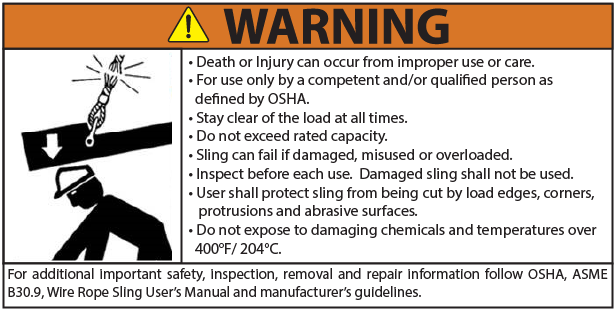
Wire rope bridles must be inspected before each use and as part of periodic inspections in accordance with ASME B30.9 and manufacturer guidelines. Inspections should check for broken wires, corrosion, kinking, crushing, damaged fittings, and wear at connection points. Any bridle showing structural damage, missing identification, or signs of overload must be removed from service immediately.