

Understanding Synthetic Slings — From Polyester to High-Performance Fibers
Check Out The Latest CraneSide Episode On YouTube
Synthetic slings are a staple on jobsites across nearly every major industry. From construction and manufacturing to utilities, infrastructure, and critical heavy lift operations, they remain a trusted rigging solution because they offer a unique combination of strength, flexibility, and handling efficiency that many traditional lifting methods simply cannot match.
As Tom De Soo, Sr. Manager Technical & Training at Slingmax Group, often emphasizes, “Selecting the correct sling always begins with understanding the lift itself—because load weight, temperature, hardware selection, lifting points, sling hitch, and clearance requirements all directly influence sling performance and overall safety.”
The Three Primary Categories of Synthetic Slings
Within the synthetic sling category, web slings, polyester roundslings, and high-performance roundslings each fill a specific role. Each type serves different jobsite demands and understanding how they are constructed is critical to selecting the correct option for both performance and safety.
Web Slings: Common, Versatile, and Widely Available
Web slings are among the most widely used forms of synthetic lifting equipment in the world, commonly manufactured from polyester or nylon and available in widths ranging from 1 inch up to 12 inches, including multi-ply constructions. Their popularity is tied closely to accessibility and affordability, particularly in general lifting applications where ease of replacement and broad availability are key considerations.
However, web slings also operate with an inherent exposure factor. Because their load-bearing fibers are not enclosed by a protective jacket, they are more directly subjected to UV radiation, abrasion, and environmental wear. Gregory D’Elia, Vice President of Engineering and Quality at Slingmax Group, notes that, “Sling damage is frequently less about capacity and more about long-term
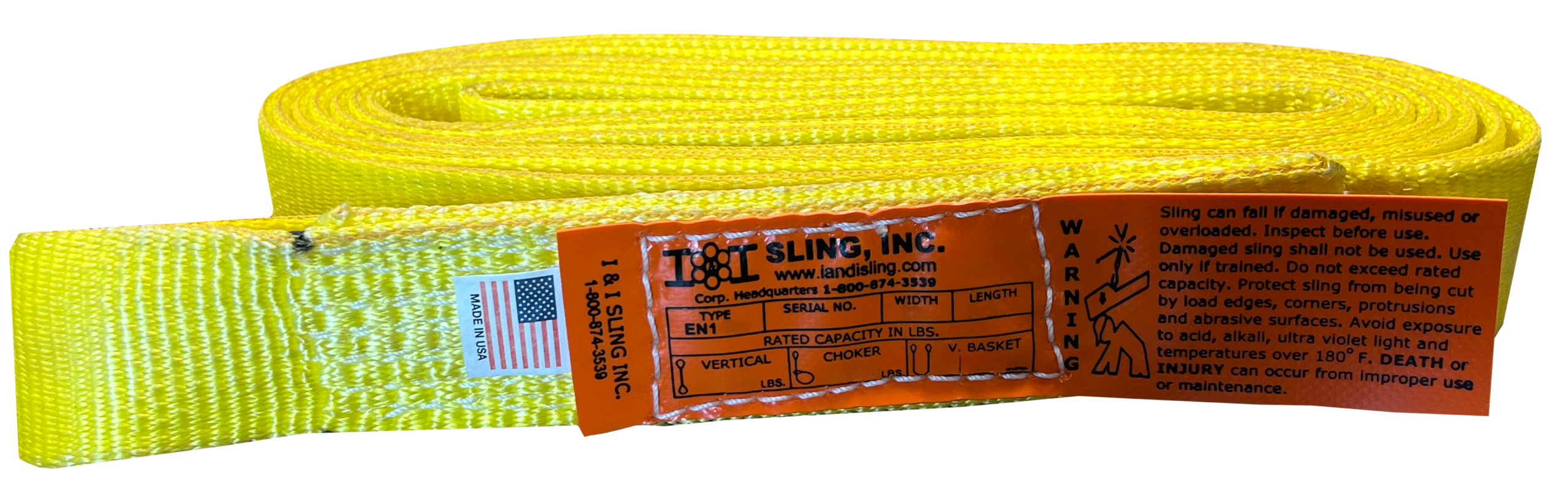
degradation, since UV exposure, abrasion, and chemical contact can gradually reduce sling integrity in ways that may not be immediately visible on the surface.”
Polyester Roundslings: Added Protection With Performance Limits
Polyester roundslings offer a different structural advantage by enclosing the load-bearing fibers within a protective jacket. Instead of relying on exposed woven plies, polyester roundslings are constructed from multiple strands of core fiber arranged in an endless loop, allowing wear points to be rotated throughout the body of the sling. This endless configuration gives users flexibility in how wear is distributed, and sleeves can be added when additional sling protection is needed or an eye-&-eye configuration is preferred.
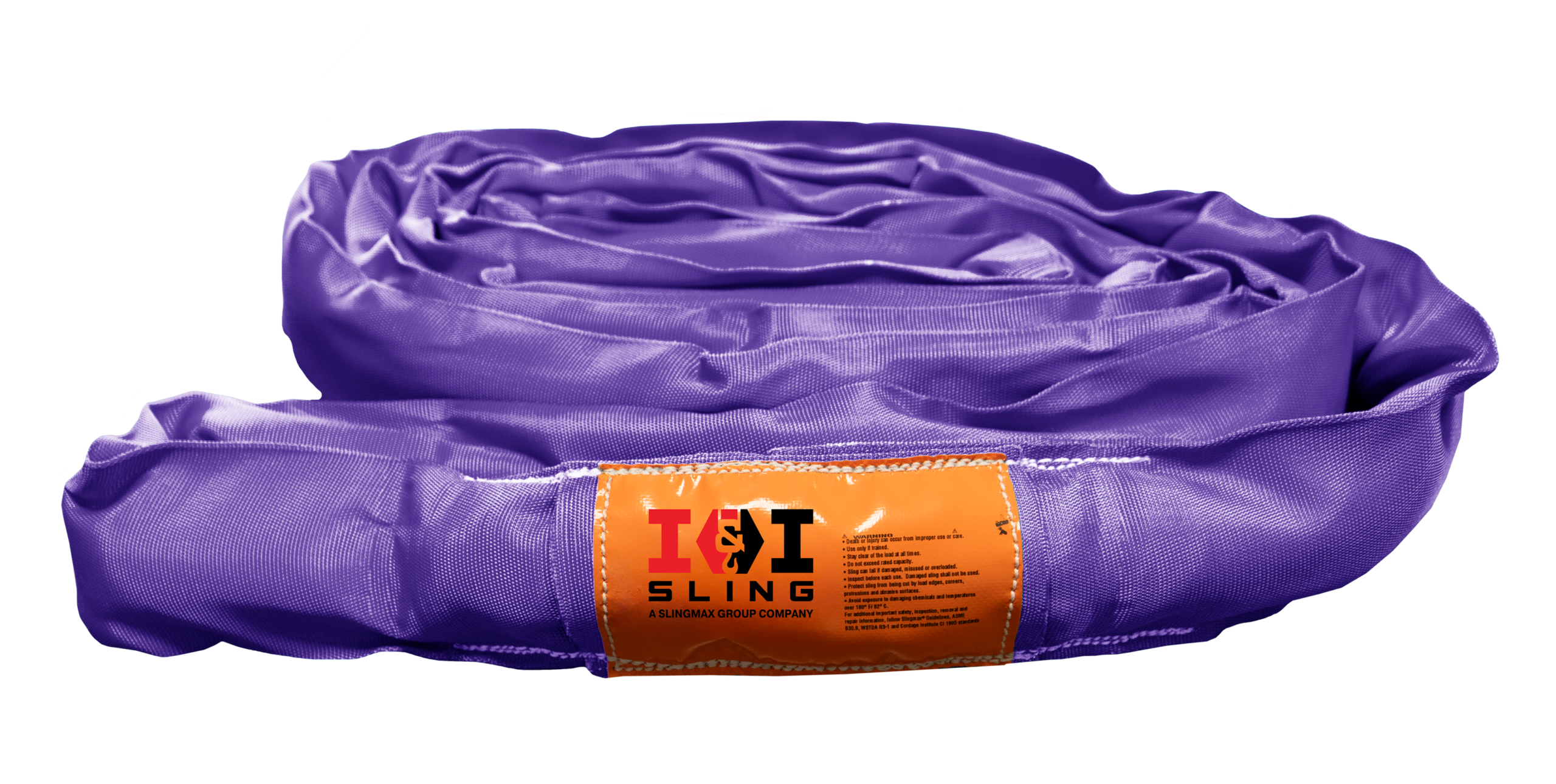
While the protective cover improves resistance to abrasion compared to flat web slings, it does not eliminate all environmental effects, particularly when slings are stored or used in prolonged outdoor conditions. Polyester remains widely used because it is cost-effective and performs reliably in light to moderate lifting applications, but it also introduces mechanical characteristics that must be considered during lift planning.
Polyester typically elongates under load in the range of 3–5%, which can become significant when headroom is limited or when load stability and precision positioning are critical. De Soo points out that polyester has a clear role in everyday lifting, but in tight clearance or high-consequence applications, that stretch can introduce bounce, reduced control, and additional rigging variables that must be accounted for.
High-Performance Roundslings: Engineering for Control and Efficiency
As lift demands increase, high-performance synthetic roundslings become a natural solution for operations requiring greater efficiency, tighter control, and reduced rigging weight. These slings are engineered with advanced fibers such as HMPE (Ultra-High-Molecular-Weight Polyethylene), aramid, LCP fibers, and proprietary blends like Slingmax® Rigging Solutions K-Spec® Core Fiber.
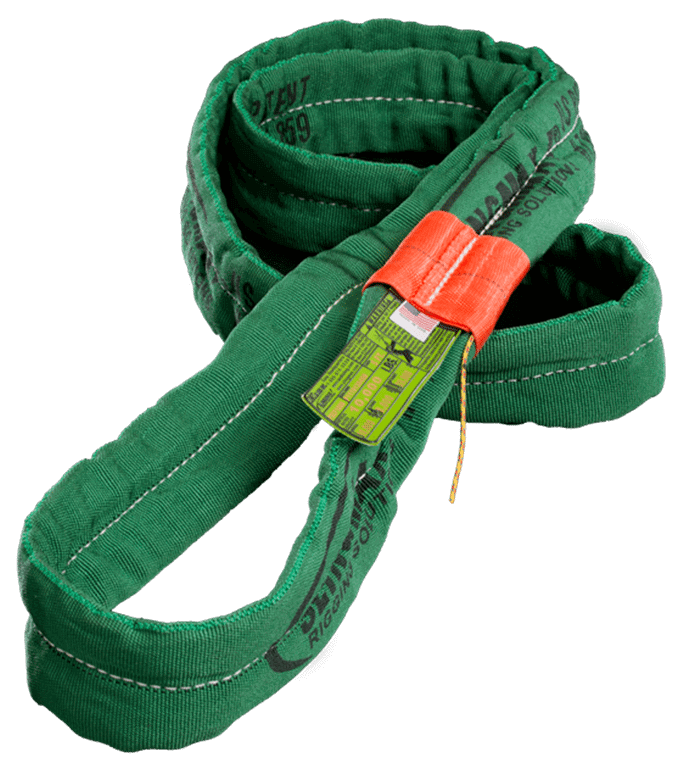
In many cases, these fibers are selected not only for their high strength, but also for extremely low elongation, fatigue resistance, and durability in repetitive lifting cycles. D’Elia explains that “In heavier lifts and more complex rigging environments, users aren’t simply investing in higher capacity—they’re investing in predictability, consistency, and control, especially when performance tolerances become tighter.”
Fiber Selection Matters: Polyester vs HMPE vs Specialty Materials
Not all synthetic fibers behave the same under load. Polyester remains widely used because it is economical and effective for general lifting, but it stretches more than high-performance fibers. HMPE offers exceptional strength-to-weight advantages and low elongation, though creep (permanent stretch of the slings due to sustained load) must be understood and managed depending on application. Aramid, Vectran, and LCP fibers provide additional options for specialized performance requirements such as heat resistance, dimensional stability, and fatigue durability.
As D’Elia notes, engineering decisions are often less about chasing the “strongest” fiber and more about matching the fiber to the jobsite environment and lift application, because each material brings tradeoffs that influence long-term sling performance.
K-Spec Core Yarn: The Engine Behind Twin-Path® and Helix®
Not all high-performance slings are built around the same fiber strategy. Twin-Path and Helix slings use K-Spec core yarn, a blended high-performance system engineered to maximize durability and minimize elongation. K-Spec has been independently tested and verified for high-cycle performance exceeding 50,000 cycles, and its field history spans decades of real-world lifting environments.
De Soo describes K-Spec as a fiber system built for daily jobsite abuse, where slings are repeatedly flexed, cycled, dragged, and loaded, and where long-term abrasion resistance becomes the defining factor in service life. He goes on to say that K-Spec’s long-term performance record makes it one of the most proven load-bearing yarn systems available for critical, repetitive, and high-consequence lifting applications.
O-Spec HMPE: Lightweight Performance with Onyx
Onyx slings take a different approach through O-Spec, a non-blended HMPE core engineered for strength-to-weight efficiency. These slings are designed to be lightweight, fast to rig, and highly effective when rigging weight reduction improves both productivity and safety.
Compared to polyester roundslings of similar capacity and length, Onyx slings can weigh roughly half as much, and compared to wire rope, they can be as little as one-tenth the weight. D’Elia notes that in many lifting operations, “…reducing rigging weight not only increases efficiency but also reduces handling strain and improves overall jobsite safety.” He adds that Onyx demonstrates how high-performance rigging does not need to be complicated—when designed correctly, lightweight systems can deliver significant strength and real-world usability without adding unnecessary complexity to the rigging process.
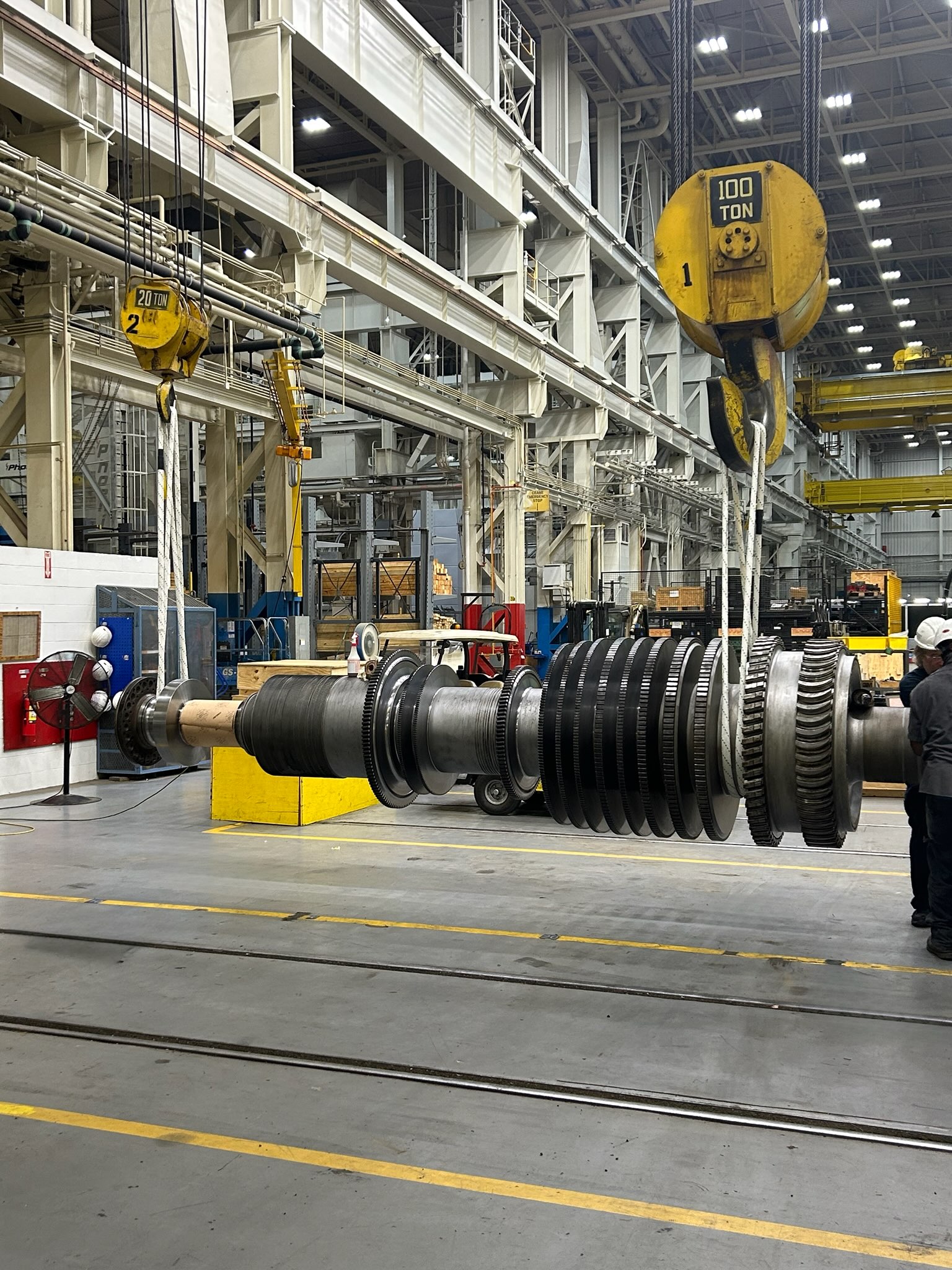
Selecting the Right Sling: Matching Performance to the Lift
Ultimately, sling selection is less about replacing one sling category with another and more about matching sling design to the demands of the lift. Polyester web slings and roundslings remain a practical solution for general lifting where cost and accessibility are priorities, while high-performance options like Twin-Path, Helix and Onyx, offer advantages in high strength, weight reduction, tight-clearance rigging, and critical lifting scenarios where redundancy and long-term durability are required.
As De Soo emphasizes, “The objective is always control—choosing the sling that delivers the best safety margin and the most efficient rigging setup for the specific jobsite conditions.” D’Elia echoes that viewpoint by emphasizing that synthetic slings are engineered systems, and when properly matched to the load and environment, they maximize both safety performance and long-term service life.
At Slingmax Group, synthetic sling innovation is driven by real jobsite requirements—durability, efficiency, reduced rigging weight, and improved control in demanding lifting environments. As D’Elia explains, “Engineering decisions are guided by what riggers encounter in the field, with the goal of designing lifting systems that solve real problems rather than simply meeting minimum standards.”
For riggers and lifting professionals evaluating sling options, the takeaway is clear: understanding the fiber, construction, and performance behavior of synthetic slings is essential for selecting the safest and most effective rigging solution.
Check out our e-commerce store to shop synthetic solutions today!