
 800-874-3539
 Rigging Handbook
 Get a Quote
Lifting Beams and Spreader Beams — Choosing the Right Below-the-Hook Device
Check Out The Latest CraneSide Episode On YouTube
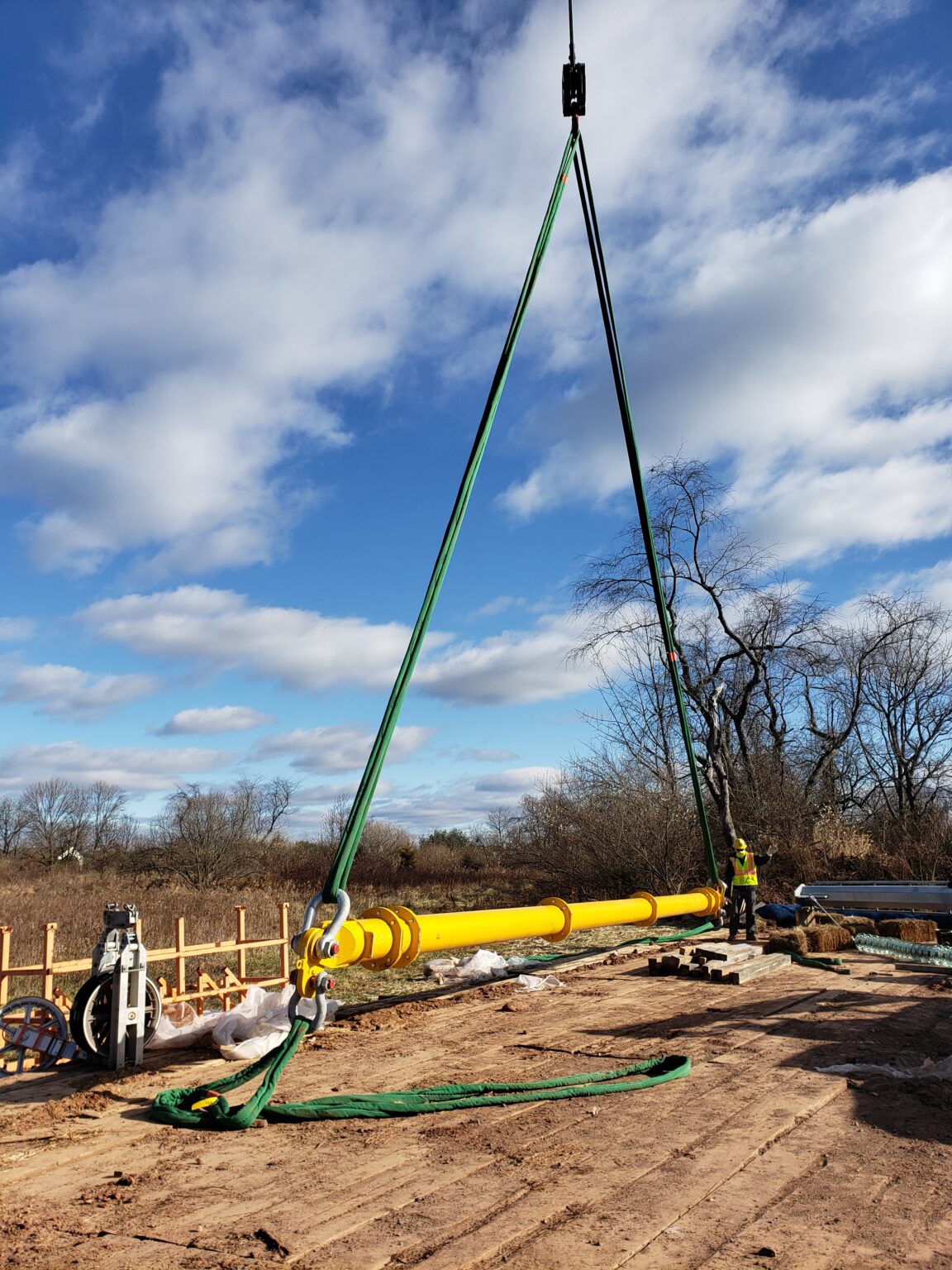
In overhead lifting operations, few rigging decisions have a greater impact on load stability and sling performance than choosing between a lifting beam and a spreader beam. Although these below-the-hook devices are often grouped together—or mistakenly used interchangeably—the way they are designed and how forces travel through them are fundamentally different.
Both lifting beams and spreader beams are used to stabilize loads and control sling angles, typically keeping lifting slings at or near a 90‑degree angle. Doing so helps protect the load, reduce stress on rigging hardware, and minimize the risk of slings sliding, cutting or crushing inward during the lift.
As Tom De Soo, Sr. Manager of Technical & Training at Slingmax Group, explains, “Any time sling angles, load geometry, or load protection matter, the type of beam you select plays a major role in safety and efficiency.”
The distinction between these two devices comes down to one core factor: how the beam carries the load.
The Key Difference: Compression vs. Bending
While lifting beams and spreader beams may appear similar, the primary difference lies in the forces applied to the beam during the lift.
- Spreader beams primarily experience compressive forces
- Lifting beams experience bending forces
This difference directly affects beam size, weight, headroom requirements, cost, and how each device is used in the field.
Spreader Beams
Designed to Manage Sling Angles and Load Geometry
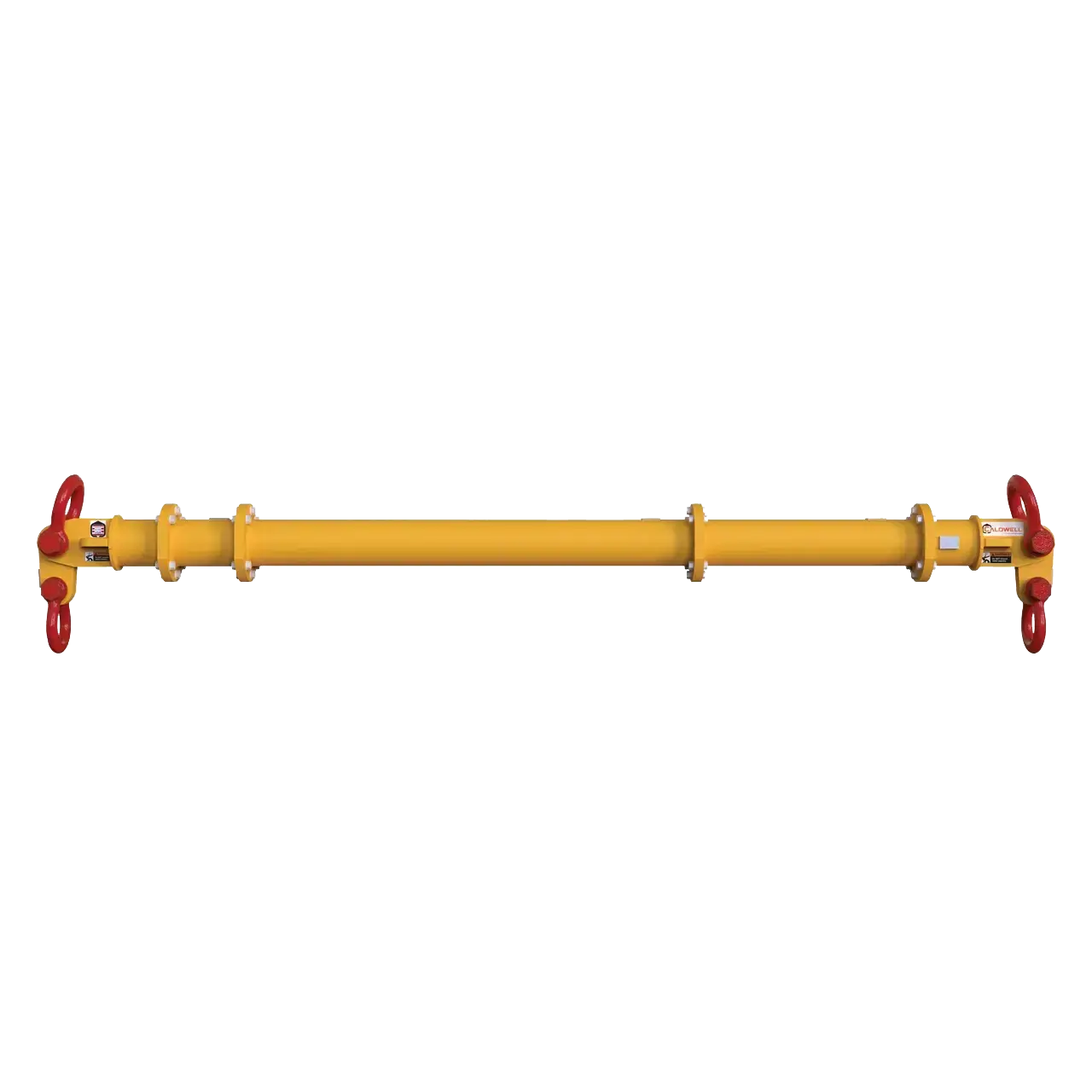
A spreader beam is a below-the-hook lifting device designed to hold two lower slings apart while converting lifting forces into compression through the beam and tension through the rigging.
Structurally, a spreader beam is a horizontal bar with lifting lugs at each end. The load is attached to the bottom lugs using slings or hooks, while the top of the beam is connected to the crane using synthetic slings, wire rope, or chain. When properly rigged, the applied forces place the beam primarily in compression rather than bending.
Because most of the load stress is absorbed by the rigging above the beam, spreader beams can often be smaller, lighter, and more material‑efficient than lifting beams of similar capacity.
De Soo notes that spreader beams are commonly selected when sling angle control and load stability are the primary goals—particularly for wide, delicate, or flexible loads where direct sling contact could cause damage.
It’s important to note that a load cannot be hung directly from a spreader beam. Spreader beams always require top rigging and are not designed to support the full load internally.
Advantages of Using a Spreader Beam
- Maintains optimal sling angles and reduces sling tension
- Converts lifting forces into compression, allowing for lighter designs
- Distributes load across two lifting points
- Ideal for wide-span or heavy-duty loads
- Helps prevent inward crushing, tipping, or sliding
- Can be fixed-length or modular for adjustable spans and sling angles
Limitations of Using a Spreader Beam
- Requires top rigging, increasing overall headroom requirements
- Not ideal for low-clearance or tight vertical spaces
- Long beams or unbalanced loads may require tag lines
- Provides limited support at the center of long or flexible loads
Lifting Beams
Designed for Direct Load Support
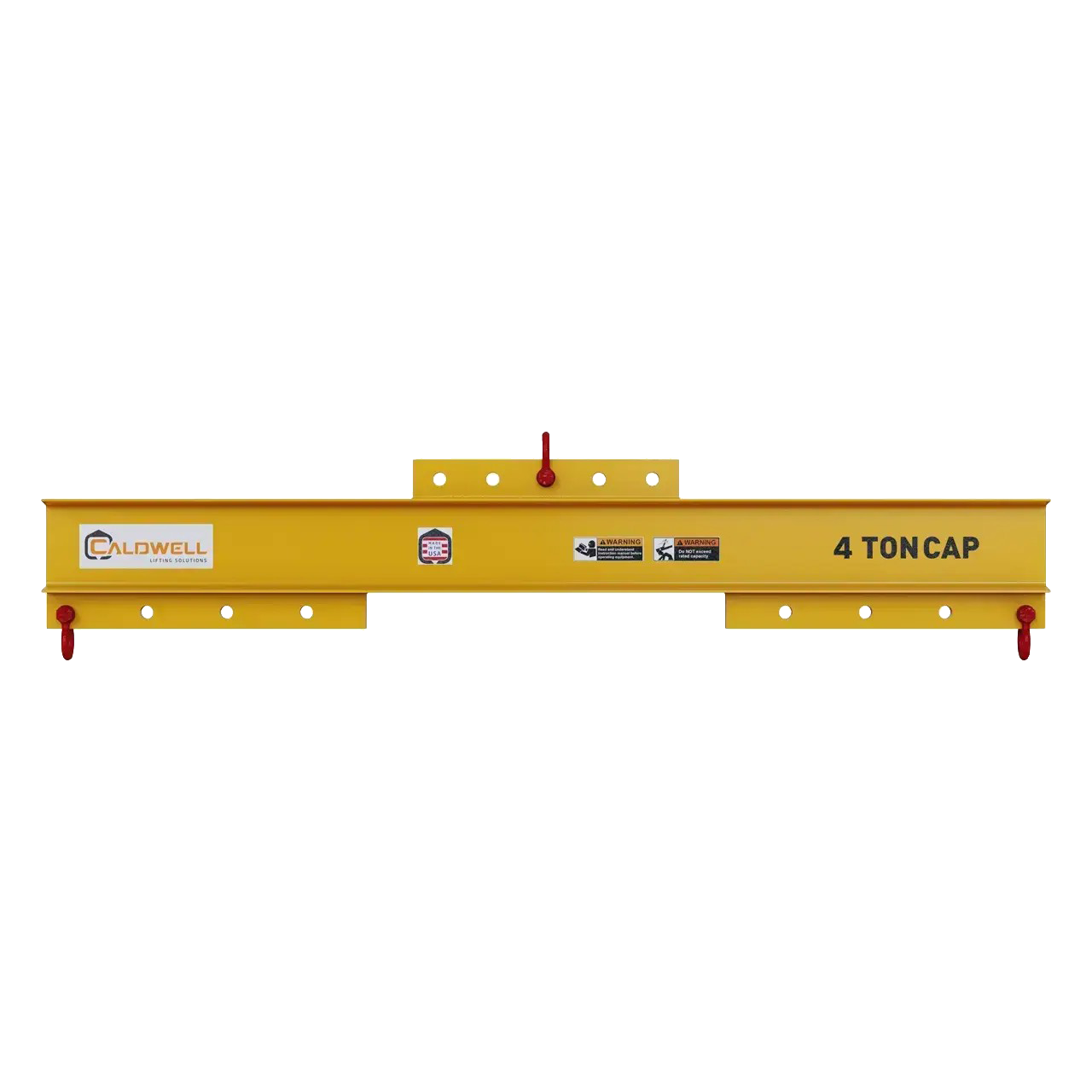
A lifting beam serves a different purpose. Unlike a spreader beam, a lifting beam is designed to connect directly to the crane hook and carry the load internally through the beam itself.
Lifting beams typically feature a single top bail or attachment point and multiple lifting lugs along the underside. Because the load creates bending forces within the beam, lifting beams must be structurally heavier and deeper to withstand those stresses.
The tradeoff is increased weight—but the benefit is reduced headroom. Without the need for top slings, lifting beams offer a more compact vertical profile, making them ideal for environments where overhead clearance is limited.
De Soo explains, “When headroom is limited, a lifting beam may be the better choice. When space allows, a spreader beam is often more efficient and economical.”
Advantages of Using a Lifting Beam
- Requires less headroom due to direct hook connection
- Provides multiple lifting points beneath the beam
- Can support loads across their full length, including the center
- Effective for flexible or weak loads such as plates or sheet metal
- Adjustable lug configurations can accommodate out-of-balance loads
Limitations of Using a Lifting Beam
- Heavier and less material-efficient than spreader beams
- Generally more expensive due to increased structural requirements
- Wide-span loads may require large, rigid beams
- Tag lines may still be required to control load rotation
Modular vs. Single-Piece Spreader Beams
Flexibility on the Jobsite
Spreader beams can be manufactured as single-piece units or as modular systems. Modular spreader beams offer significant flexibility, allowing pipe sections and end fittings to be configured for the exact span required—and reused across future lifts.
I&I Sling is a premier supplier of Caldwell
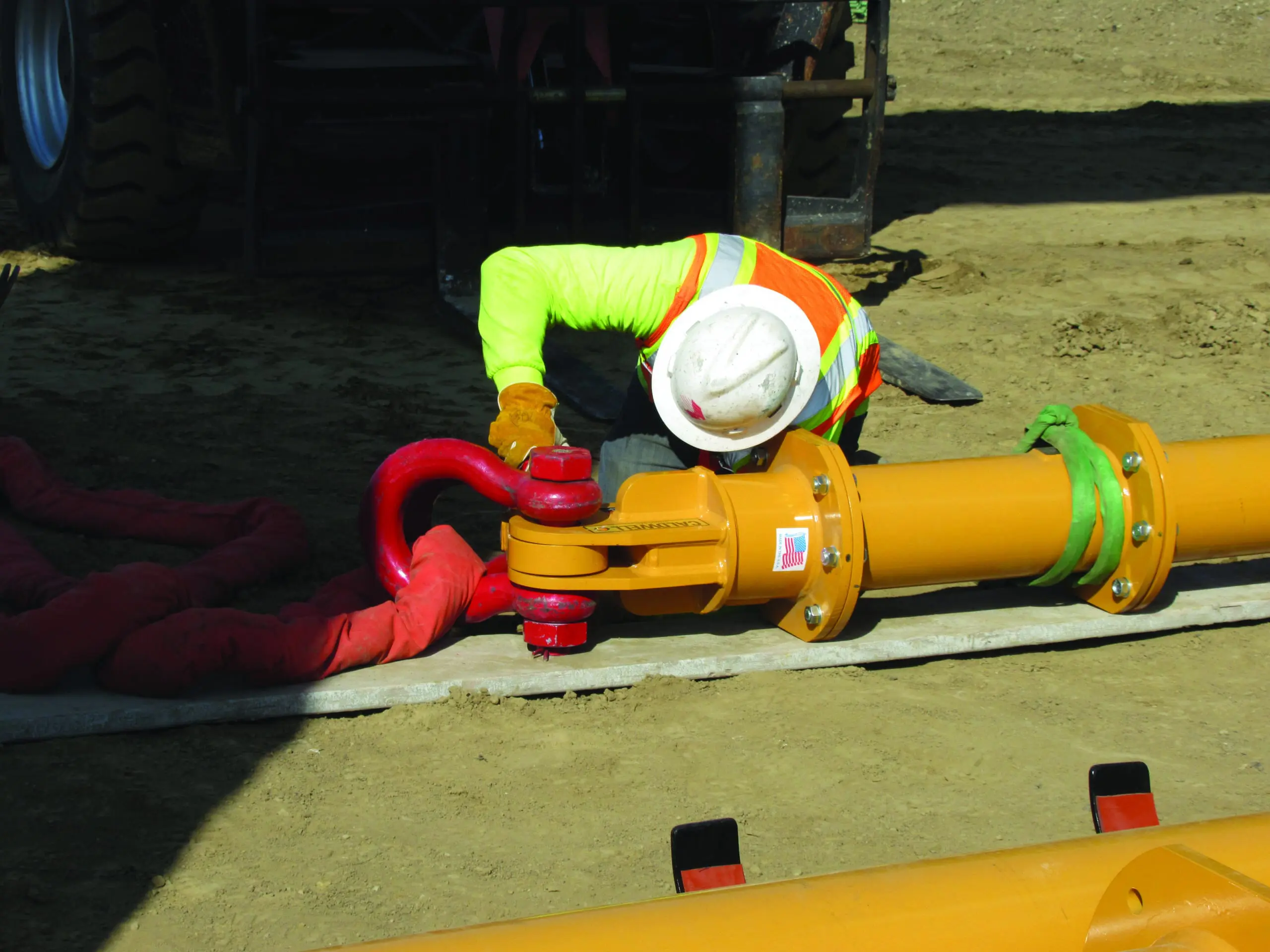
Duramod® Spreader Beams, known for their lightweight construction, versatility, and cost-effectiveness. Caldwell spreader beams comply with ASME standards and are available in capacities up to 130 tons, with spans reaching nearly 59 feet.
Modular designs reduce the need for multiple dedicated beams, lower inventory costs, and allow crews to adapt quickly to changing jobsite requirements.
Complex Lift Configurations and Cascading Rigs
Standard spreader beams are typically used in two-point lifts, but some loads require additional pick points. In those cases, spreader beams can be assembled into cascading configurations, creating multiple lifting points while maintaining proper load geometry.
These configurations introduce additional variables—load distribution, deflection, and interaction between beams—making proper engineering and product selection essential.
As De Soo stresses, “Cascading spreader beams are effective, but they should never be improvised. Proper engineering oversight is critical.”
Selecting the Right Beam for the Lift
Beam selection should always be driven by the demands of the lift itself. Key considerations include:
- Load weight and center of gravity
- Load length and required span
- Sling angles and attachment points
- Available headroom
- Lift configuration and number of pick points
Heavy or wide-span loads often favor spreader beams, while loads requiring full-length support or minimal headroom may be better suited for lifting beams. Site constraints—especially overhead clearance and crane type—can ultimately determine which solution provides the best balance of safety and efficiency.
Working with an experienced rigging specialist ensures that the beam, rigging, and lift plan are properly matched.
Safer Lifts Start with the Right Beam
Spreader beams and lifting beams each play a critical role in modern rigging operations. Selecting the right device helps reduce sling stress, improve load stability, protect equipment, and increase jobsite safety.
At I&I Sling, helping customers select the right below-the-hook lifting solution is a priority. With the launch of the I&I Sling e‑commerce store at shop.iandisling.com, customers can explore available spreader beam options and accessories with ease.
For rigging professionals, the takeaway is simple: the right beam makes all the difference.